End-to-End IV Production
PW/WFI generation → solution preparation → ISPM molding/filling → terminal sterilization → inspection → packing → controlled storage.
Project Aqua Pure IV Manufacturing Facility - Campus Architecture & Complete 3D Renderings
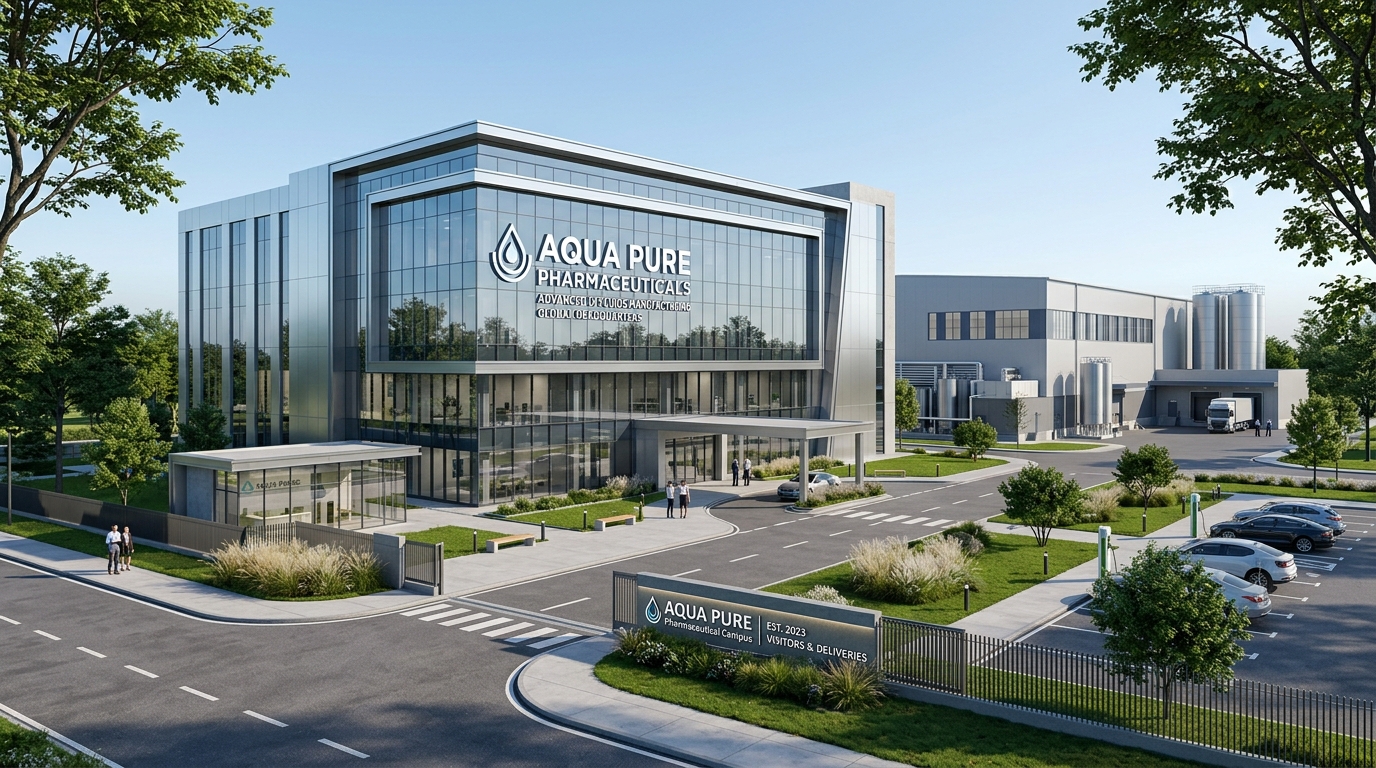
195,050 sq. ft. usable site area (35.0 Kanals) with 138,335 sq. ft. building footprint, glass facade administration, dedicated truck logistics bays, and high-density finished goods storage (3,564 Pallets).
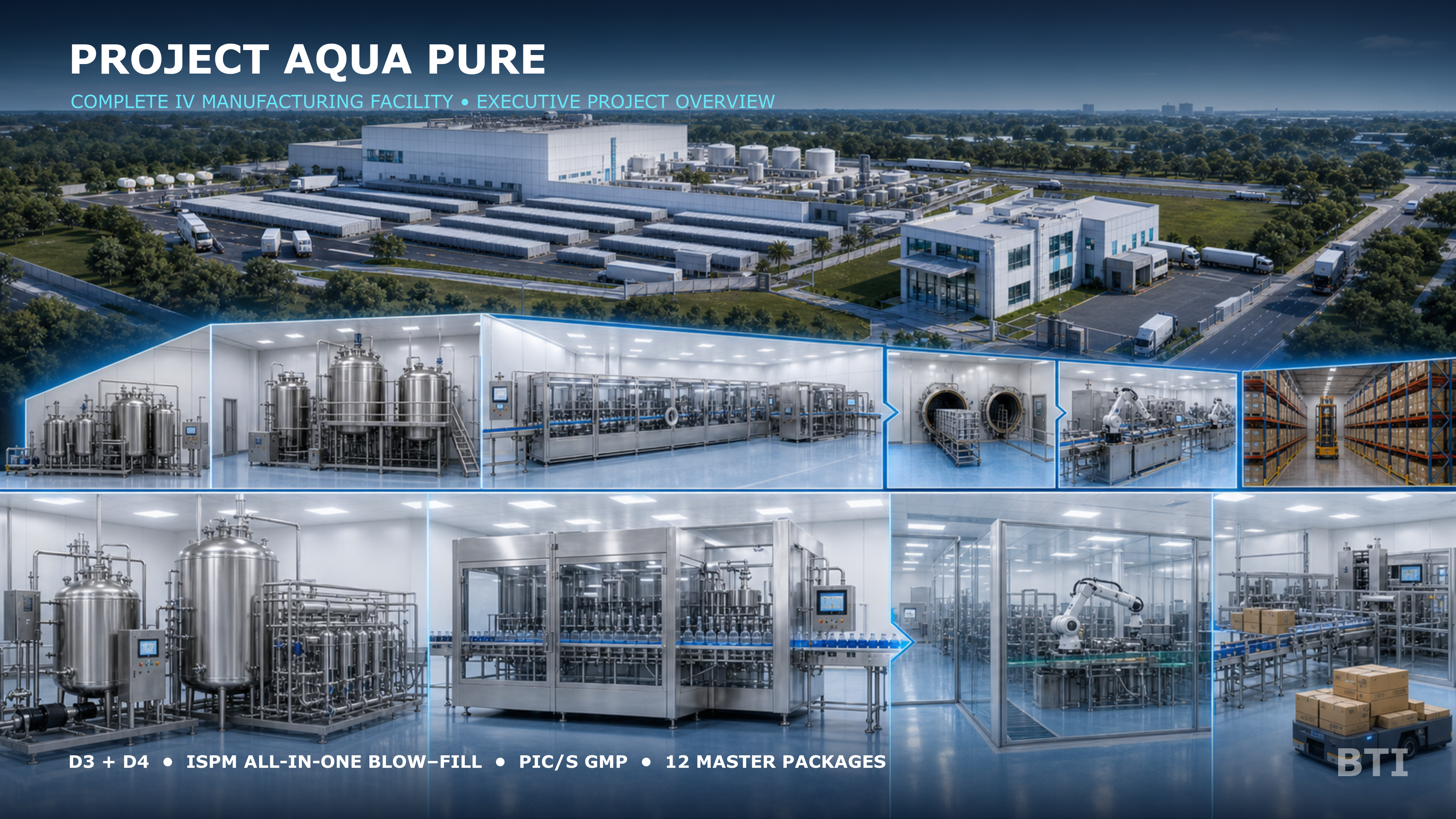
Executive Overview Board for CEO Presentation Room • Highfine Group / Bolton Pharma Project Baseline.
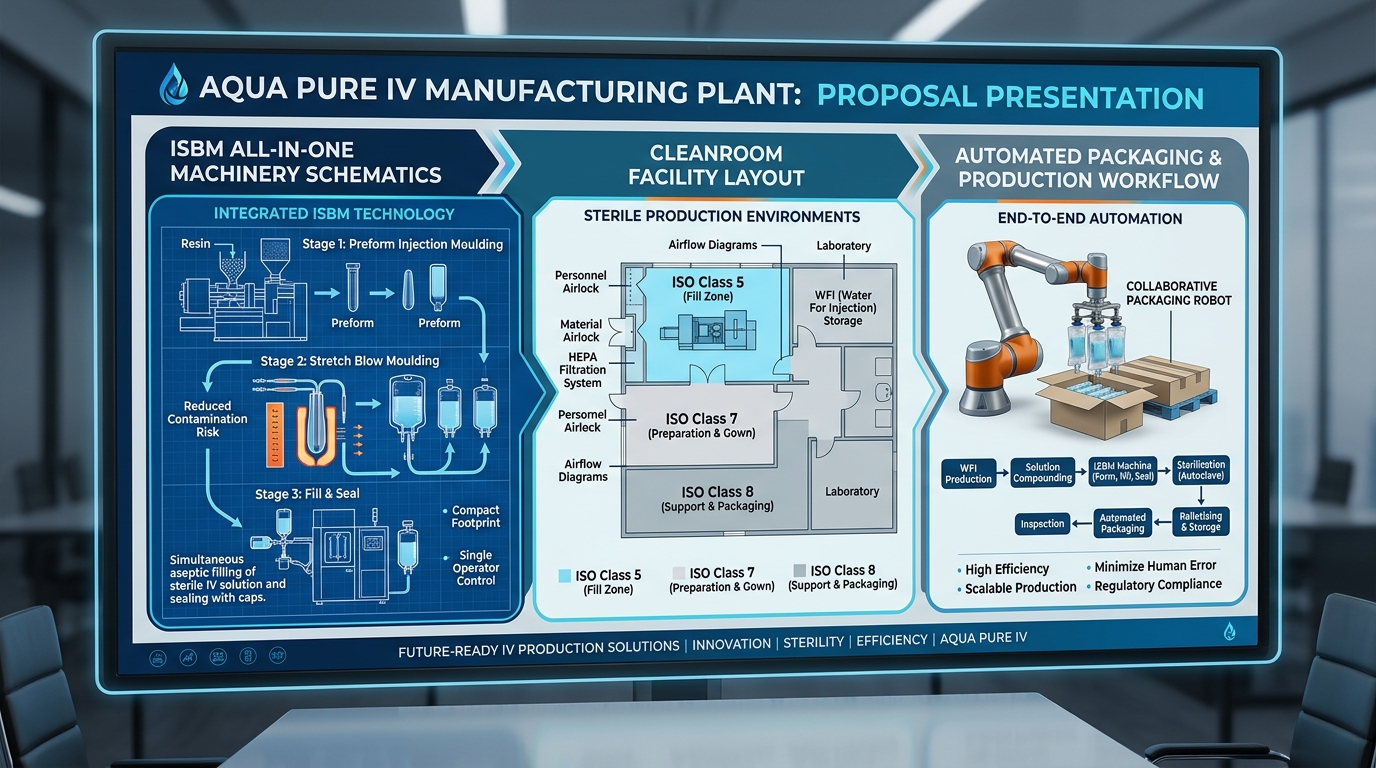
End-to-End ISBM All-in-One Machinery Schematics, Cleanroom Facility Zoning, and Automated Robotic Workflow.
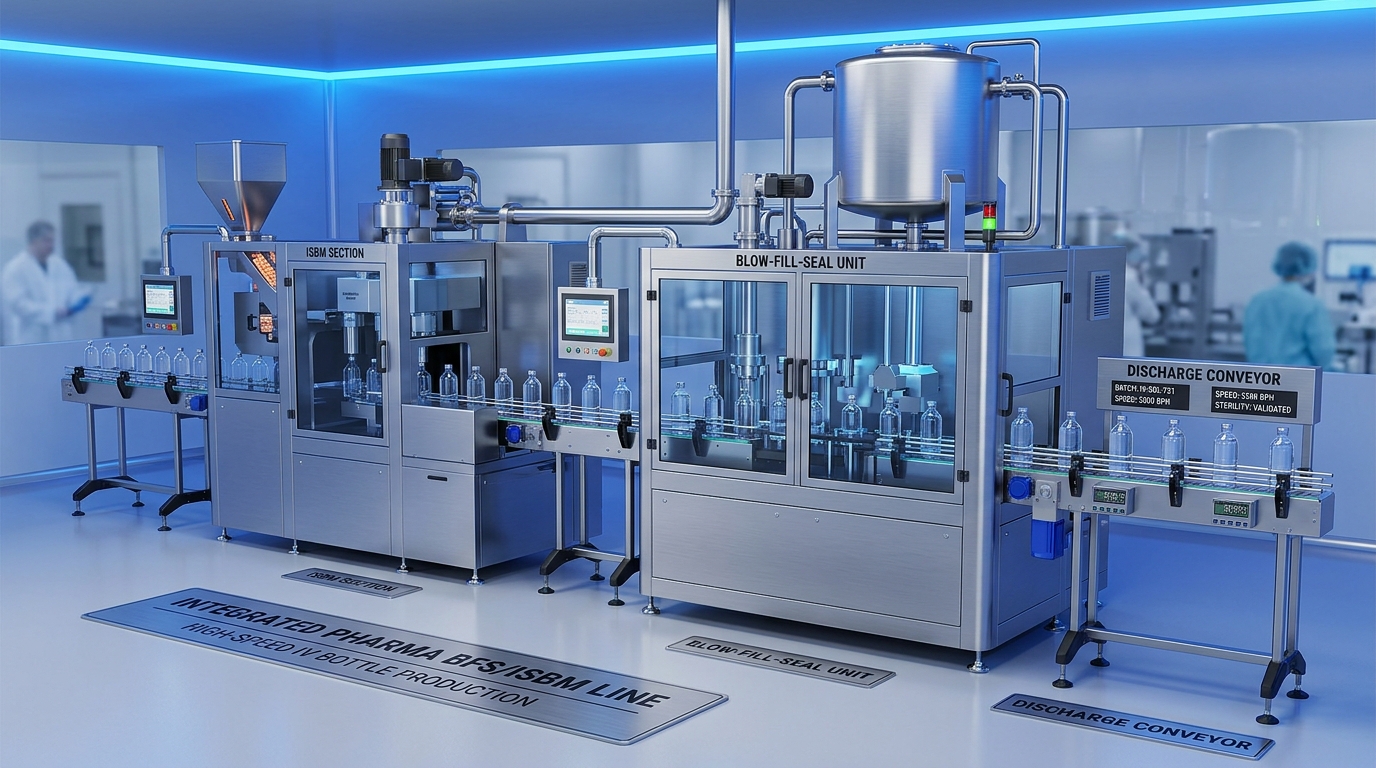
Drawing: M-F26002注吹灌布局.dwg • Continuous preform molding, blow-fill-seal, and capping.
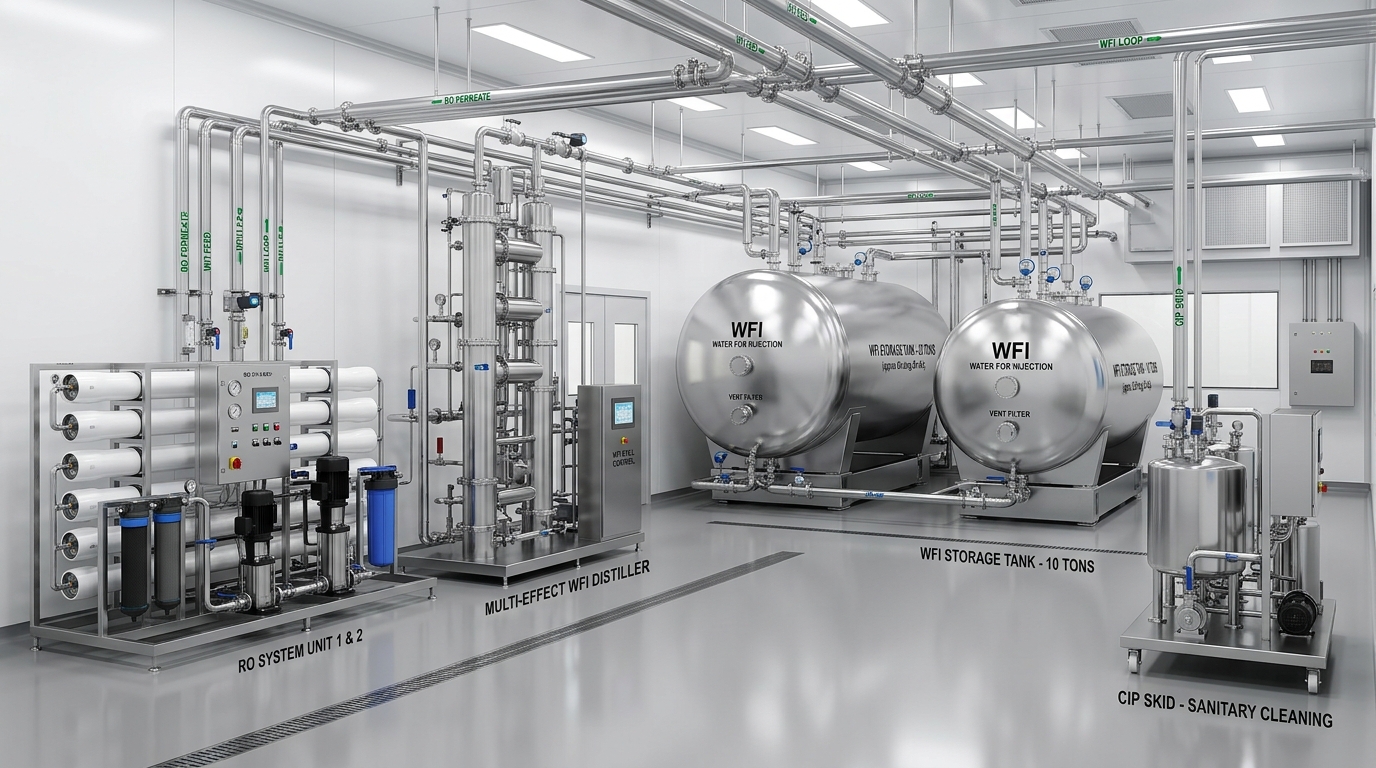
Drawings: water system layout(1).dwg & Horizontal WFI tank 10T/20T • RO plant, Multi-Effect WFI distiller, 10T/20T WFI tanks, CIP skid.
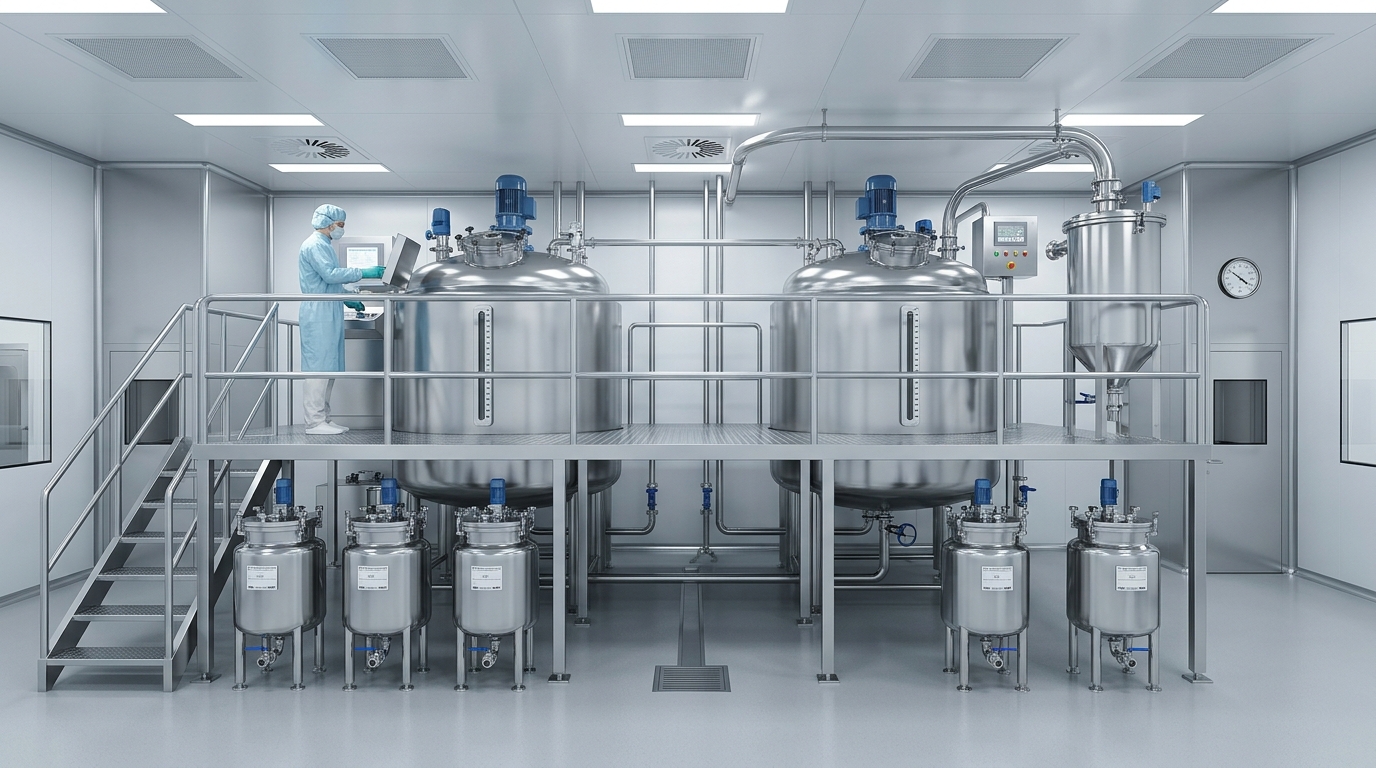
Drawing: Manufacturing & Holding PG15T3.dwg • Twin 15,000L PG15T3 mixing vessels, 3m steel platform, API charging tanks.
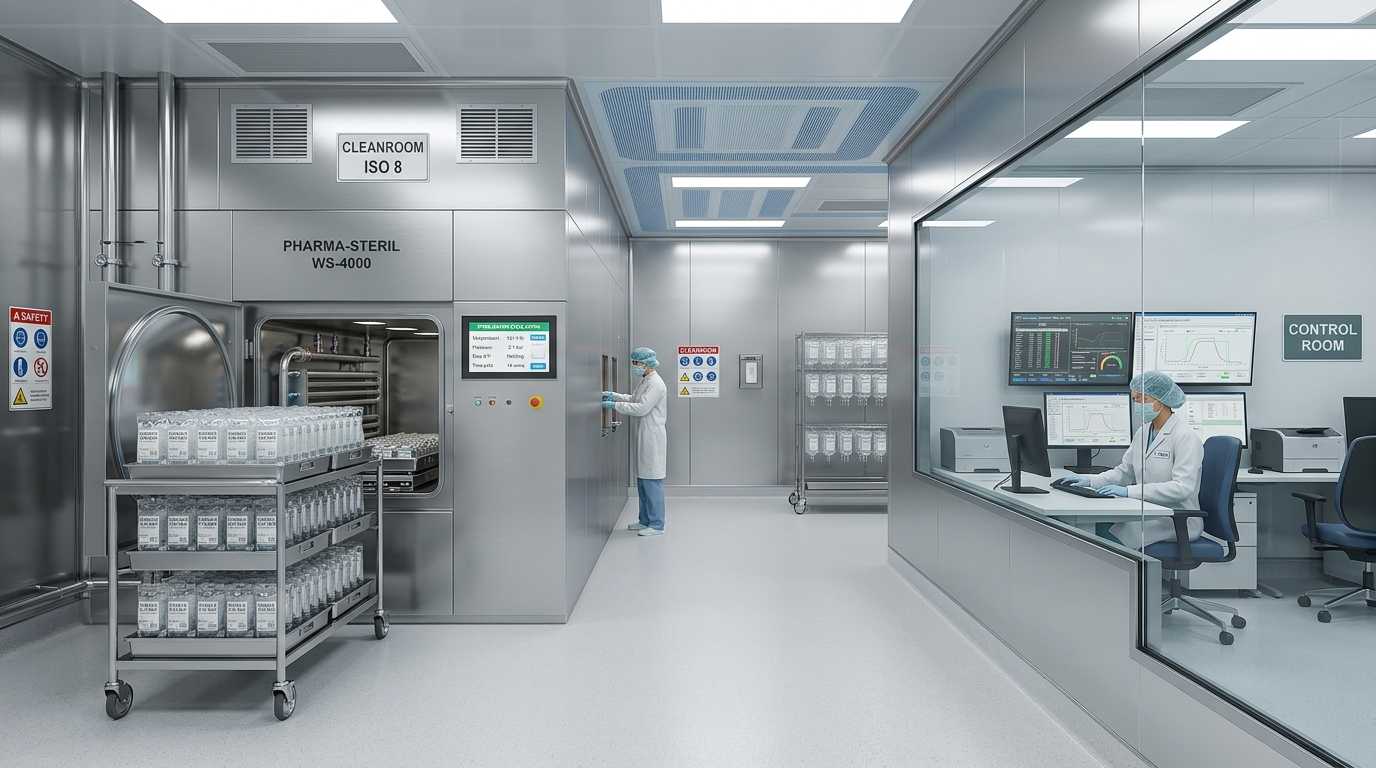
Drawing: Autoclave room layout 2025.12.14.dwg • Water-bath sterilizer, sterilizer carts, control room monitoring station.
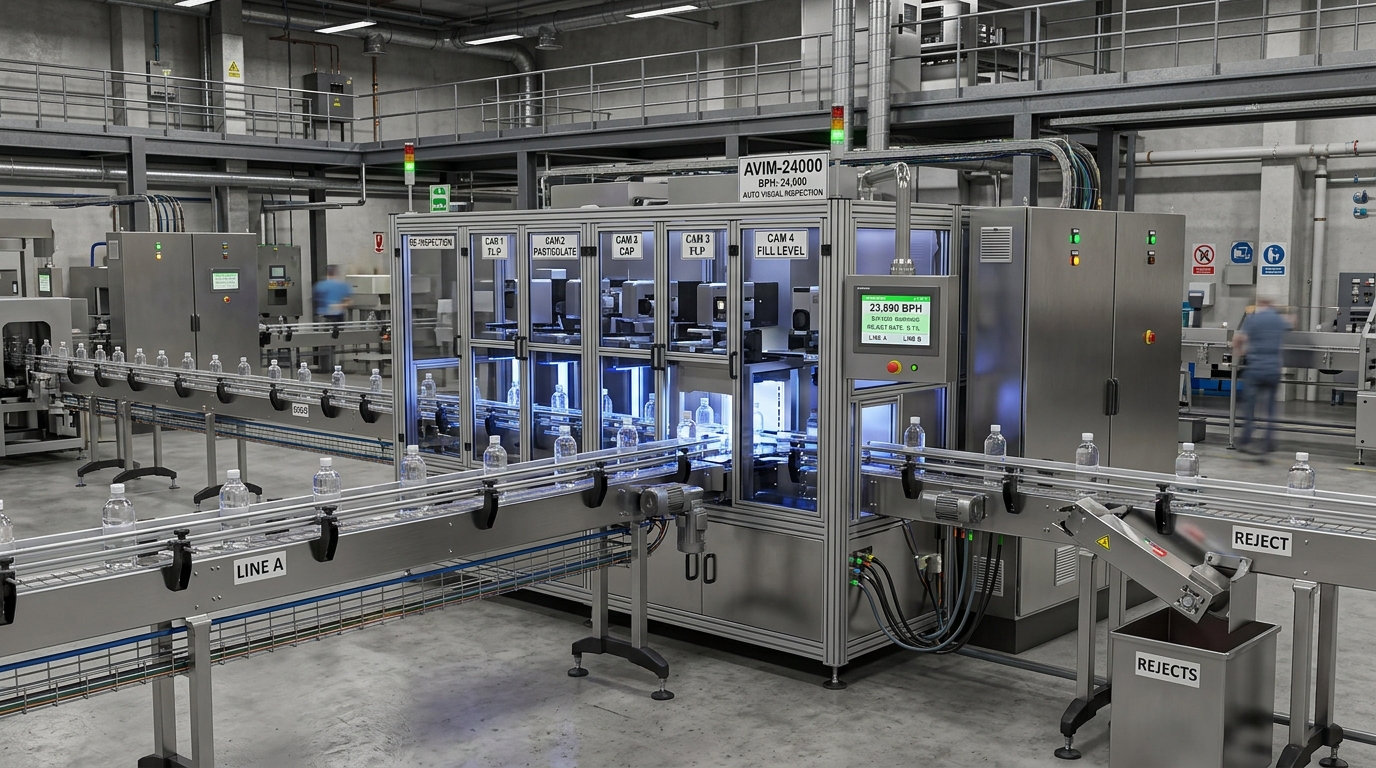
Drawing: External Dimension of VIM (24000BPH).pdf • 24,000 BPH optical VIM inspector, dual re-inspection conveyor lines.
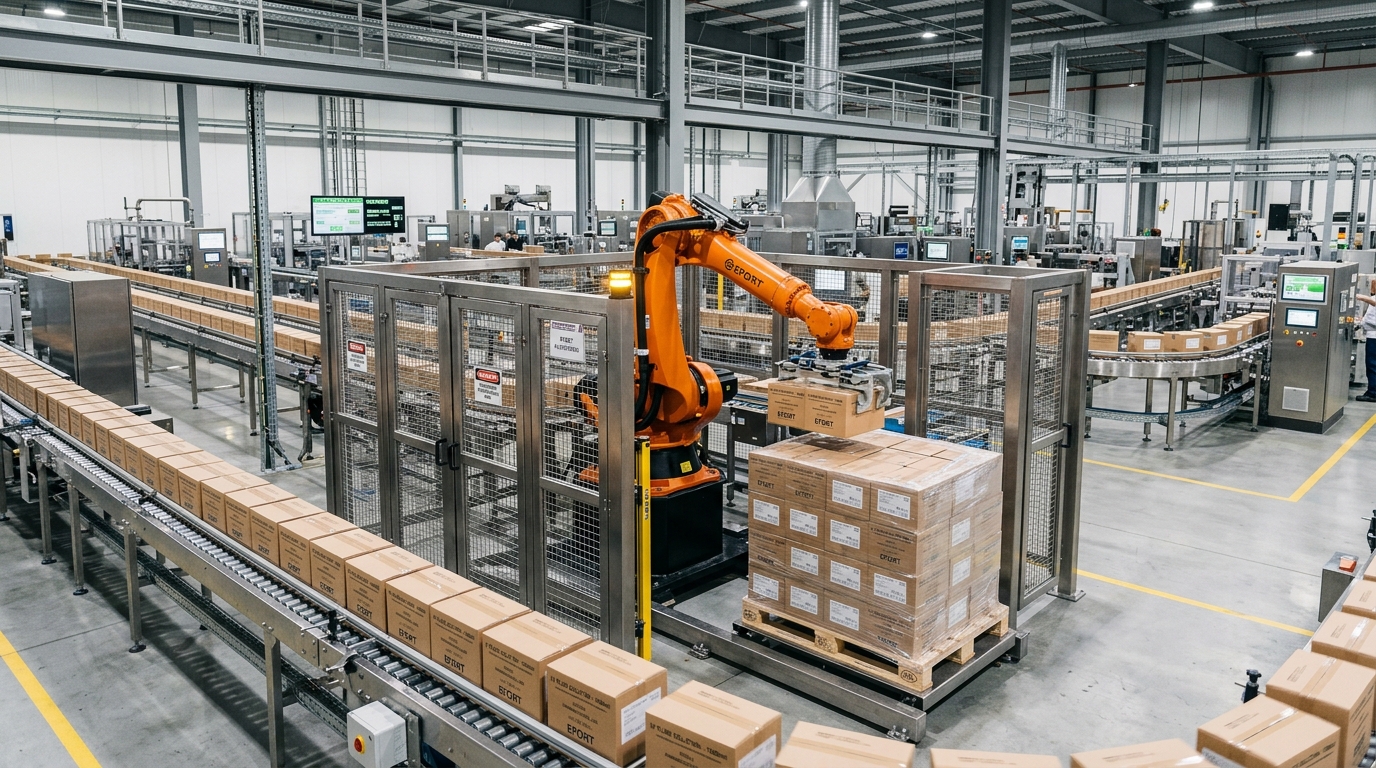
Drawing: Packing Line 巴基斯坦最新方案.dwg • EFORT ER210-2700 6-Axis Palletizing Robot • Speed ≥400 bpm.
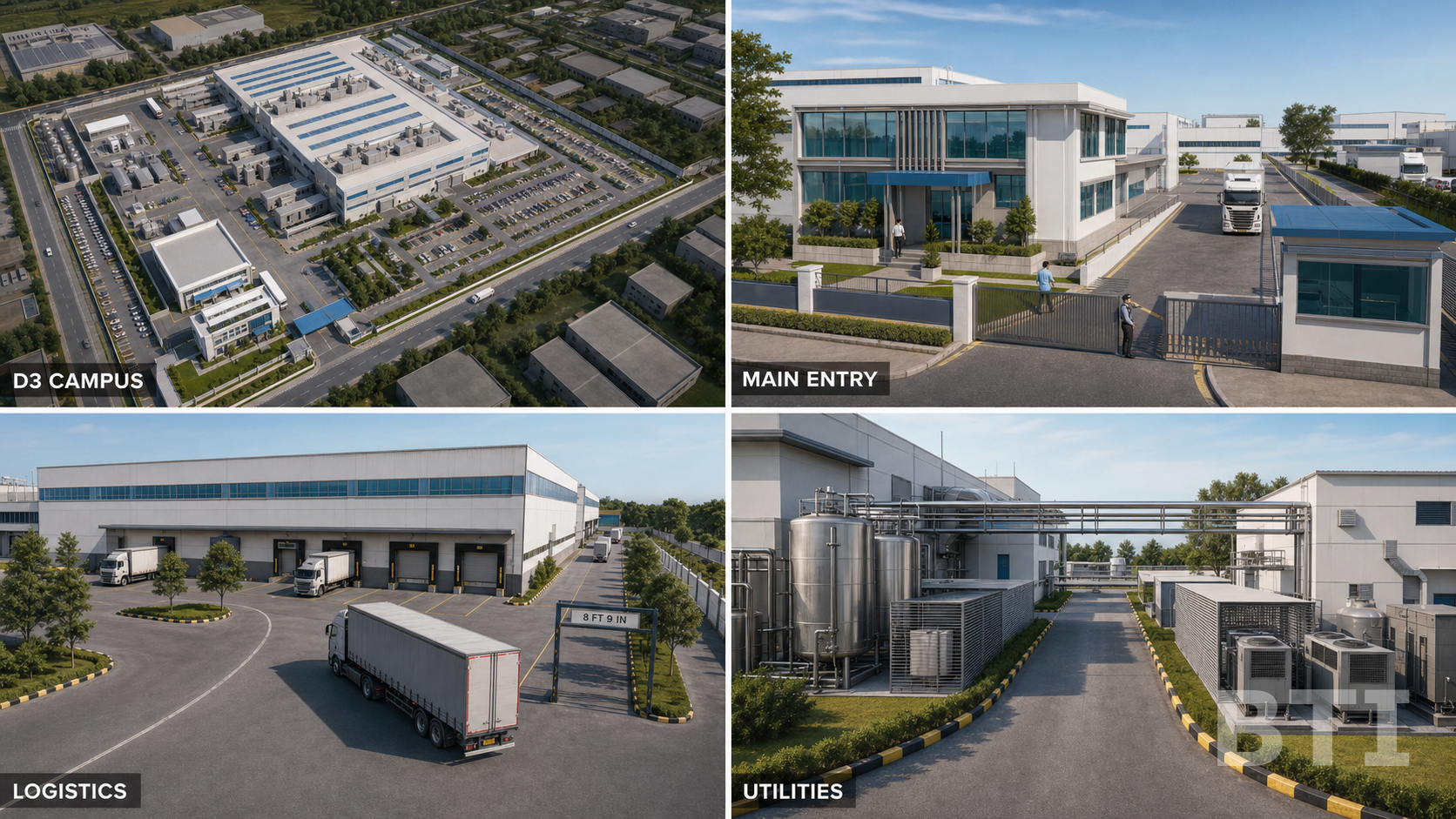
190,780 sq. ft. dual-train expanded campus architectural rendering, security gates, and 35.00 Kanal perimeter layout.
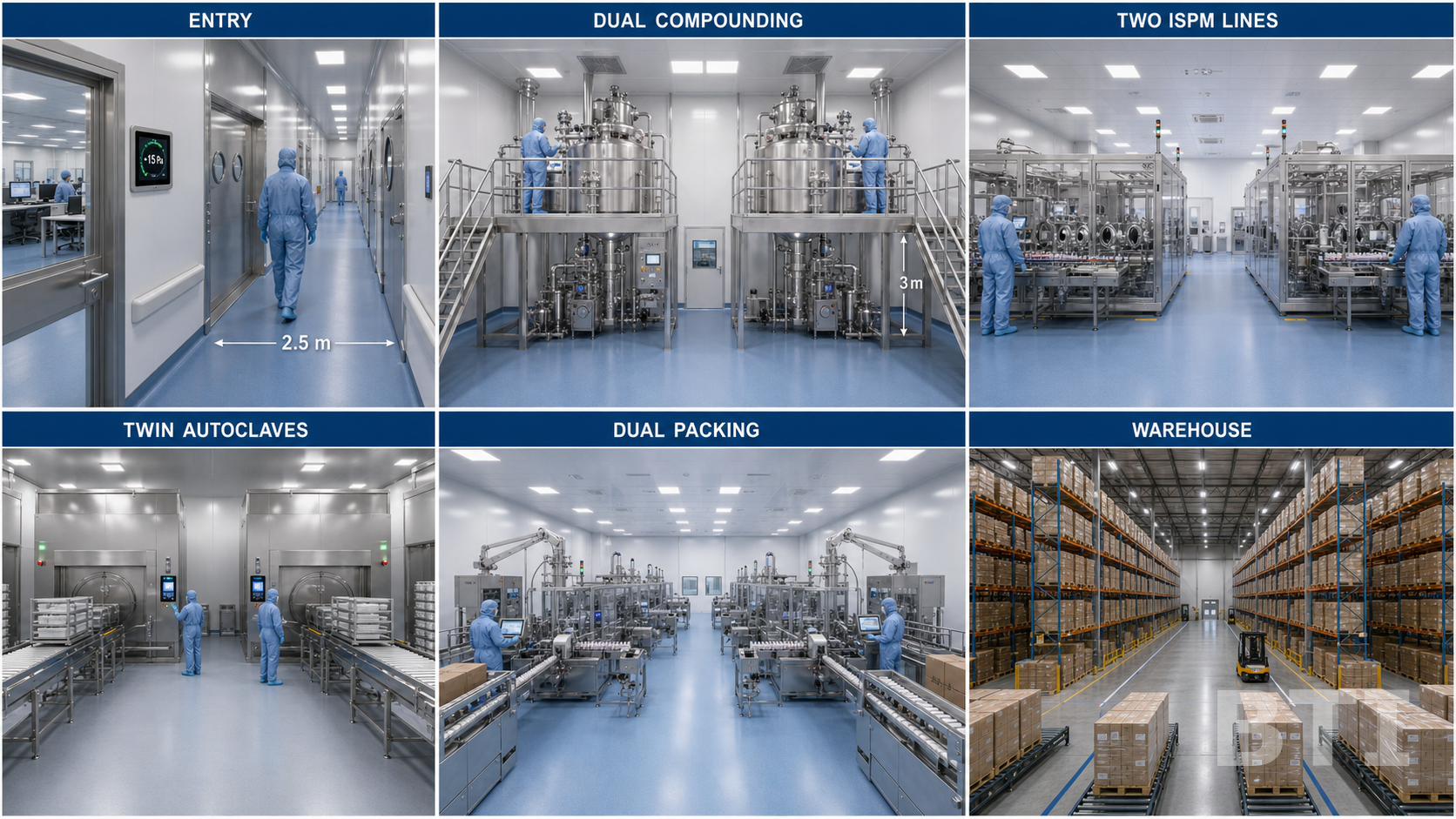
Cleanroom ISO 5 filling core, Grade B/C gowning airlocks, dual packaging halls, and warehouse layout for Option AQI-D3.
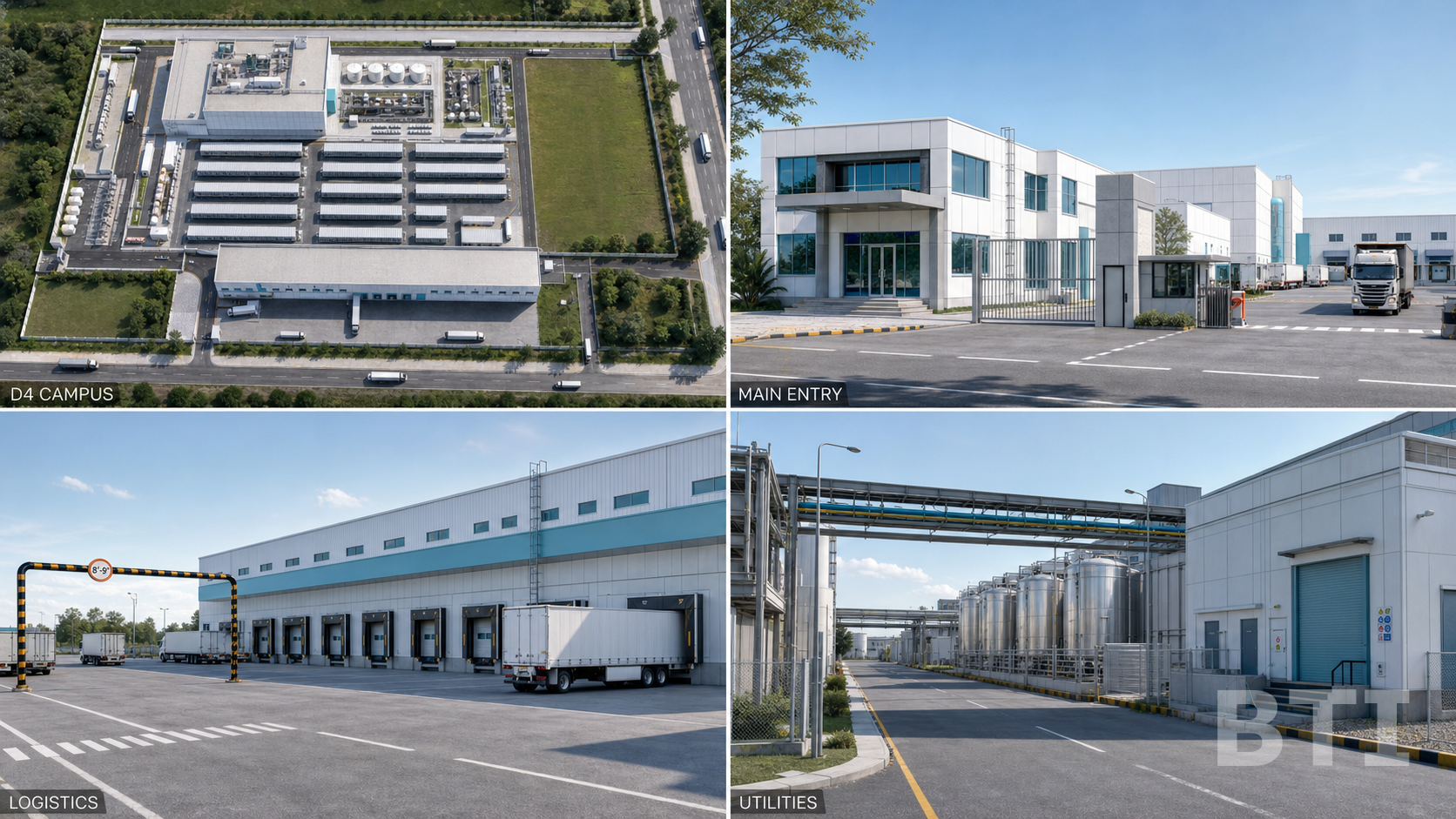
138,335 sq. ft. compact phased campus architectural rendering with high-density warehouse shell.
High-density 3,564 pallet storage racking system (+200% capacity), ISBM BFS core, and compact utility block.
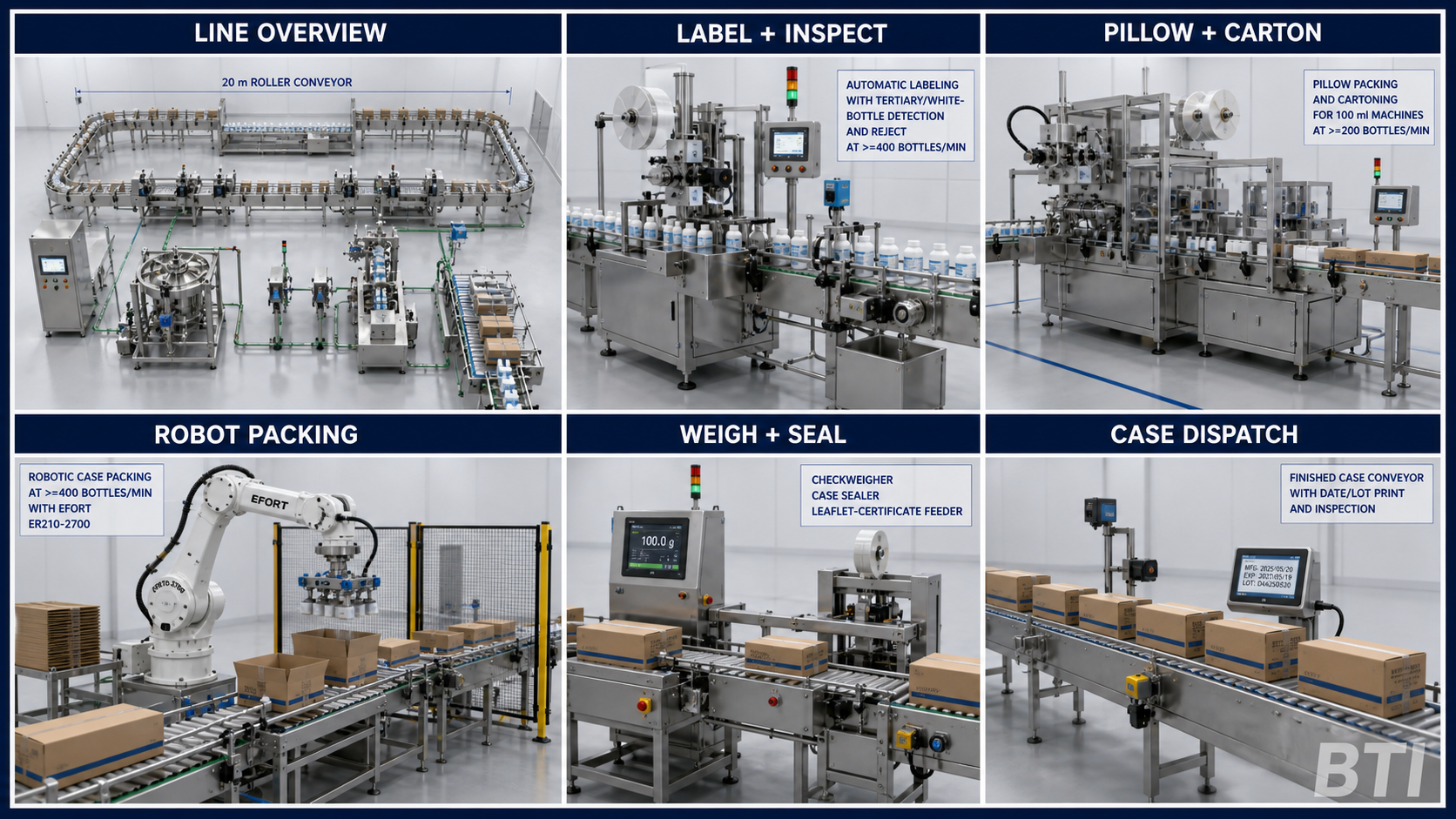
EFORT ER210-2700 6-axis industrial palletizing robot, JDZ-320P continuous cartoning, pillow packers ($\ge 400\text{ bpm}$).
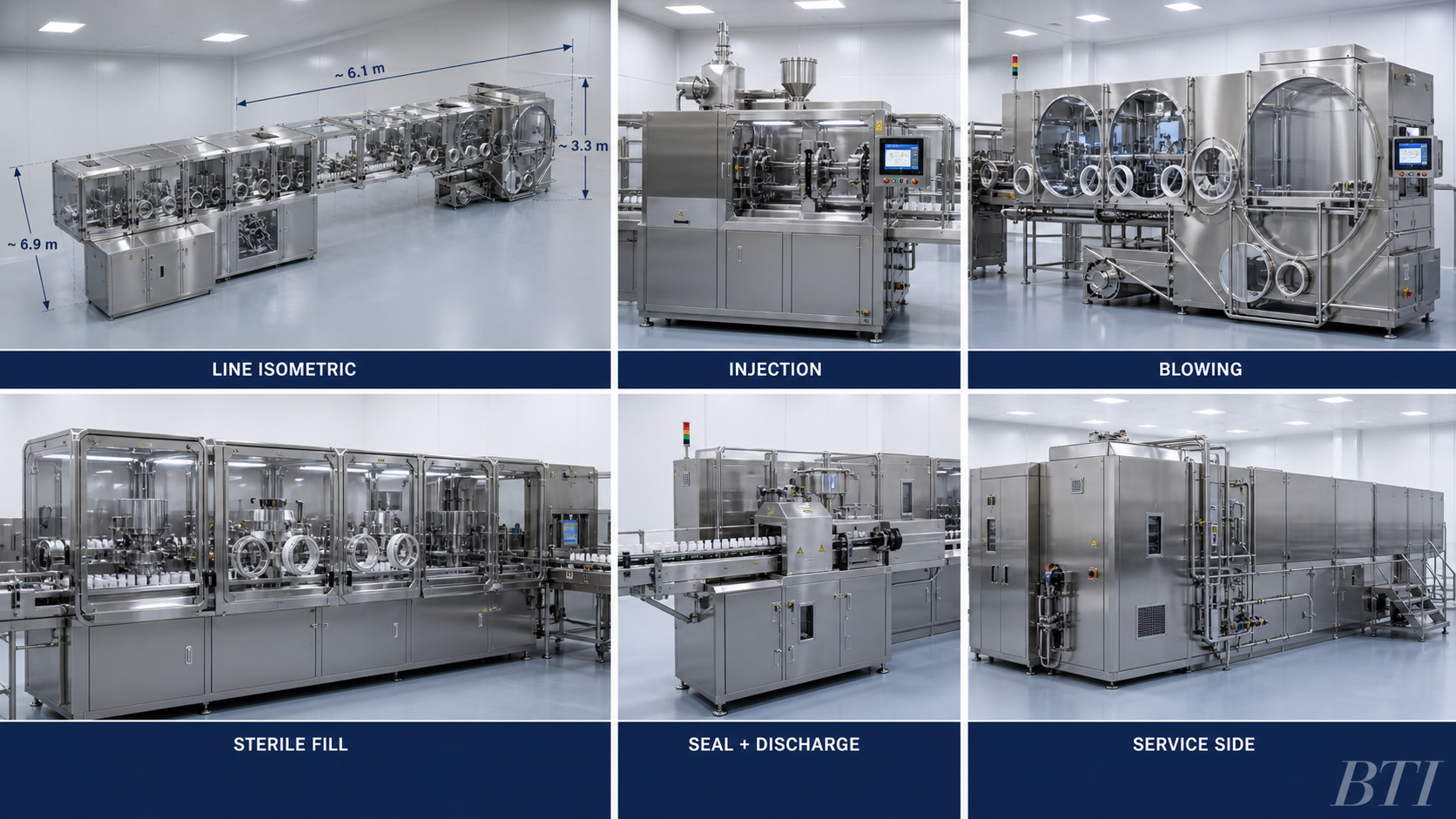
Integrated single-step preform molding, stretch blow molding, sterile IV solution filling, and capping line.
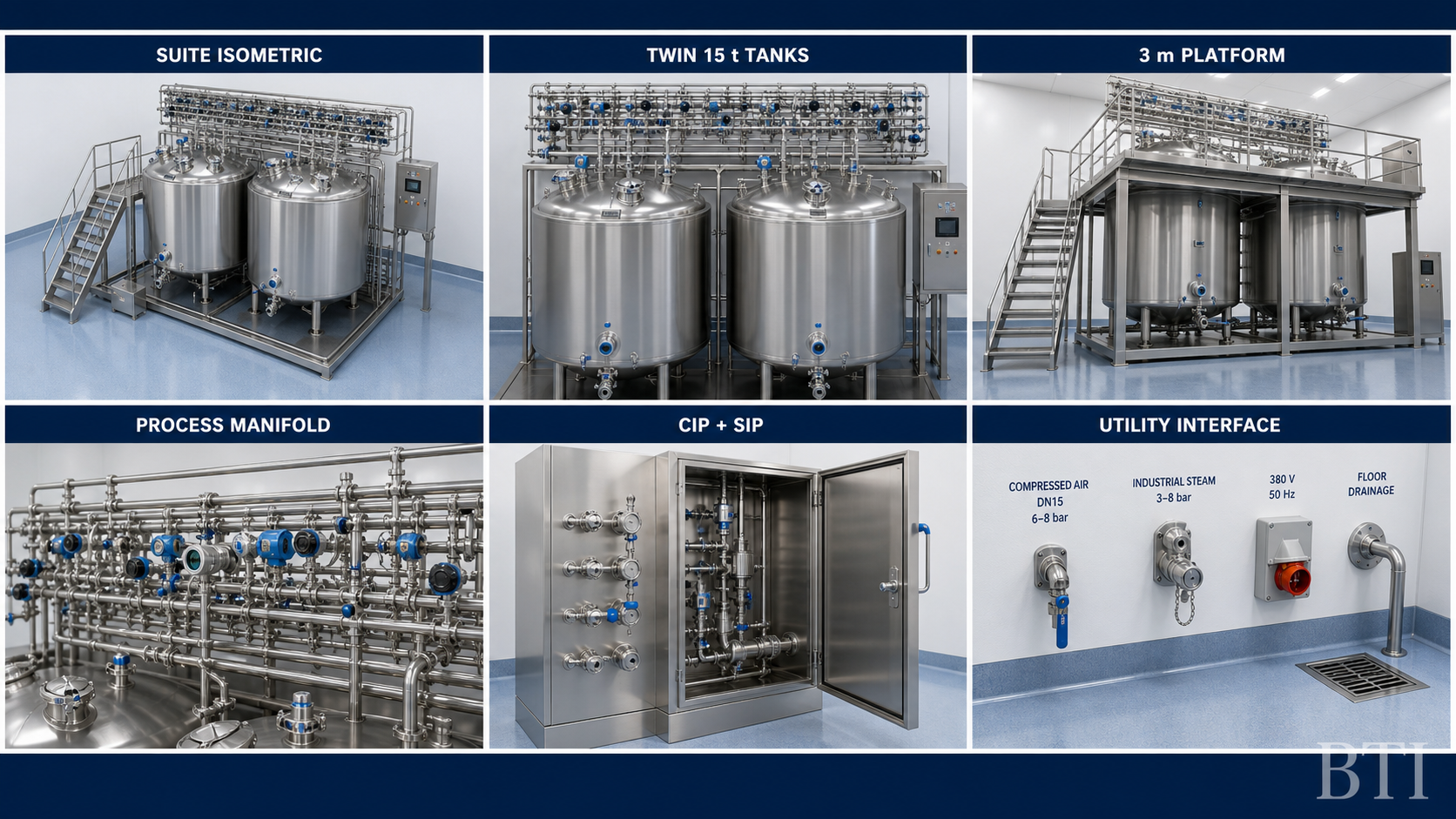
Twin 15,000L PG15T3 jacketed stainless steel compounding vessels, 3.0m elevated SS platform, API vacuum charging receiver.
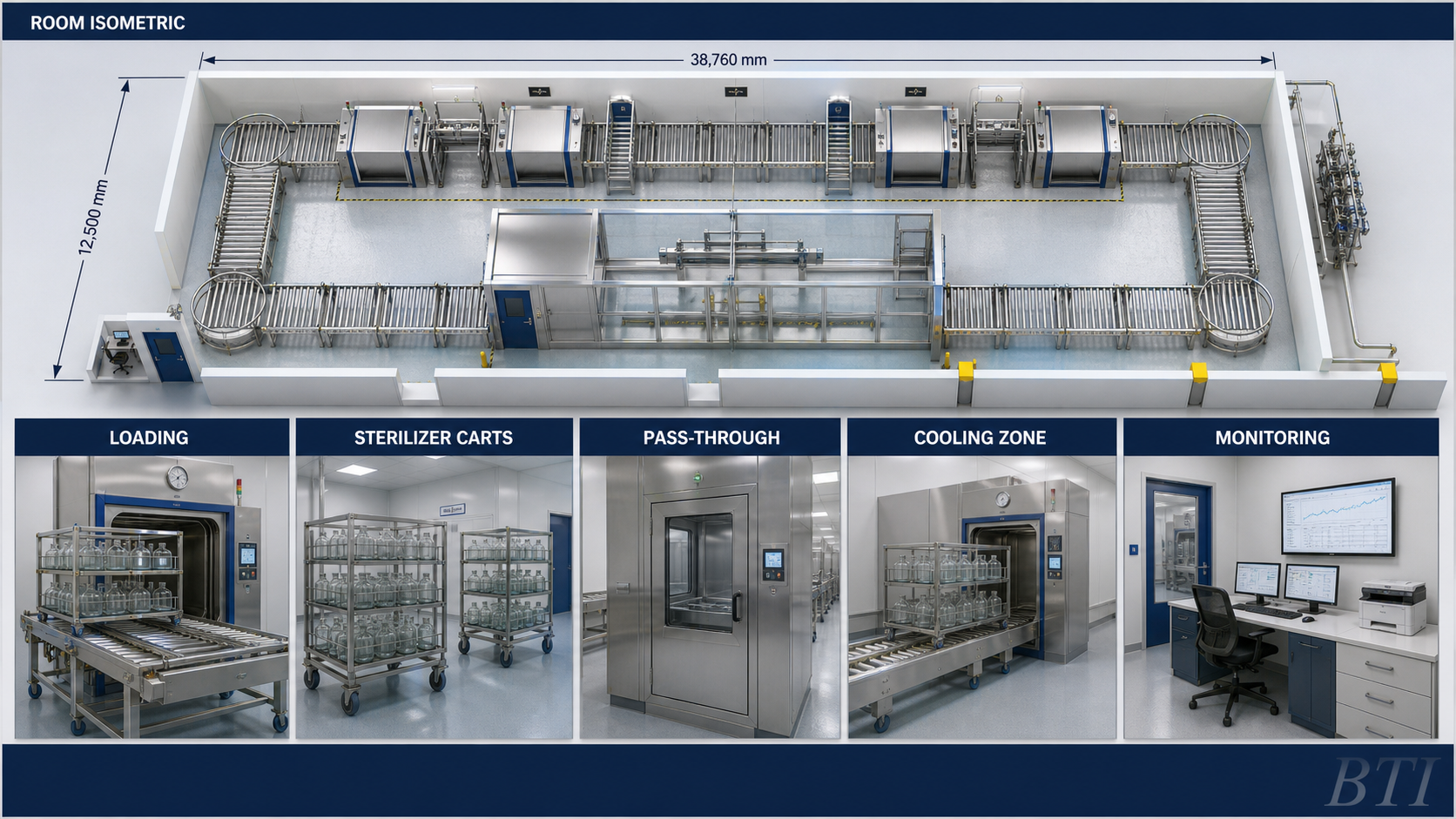
Water-bath overpressure sterilizers ($121^\circ\text{C}$), sterilizer carts, control room computer monitoring station.
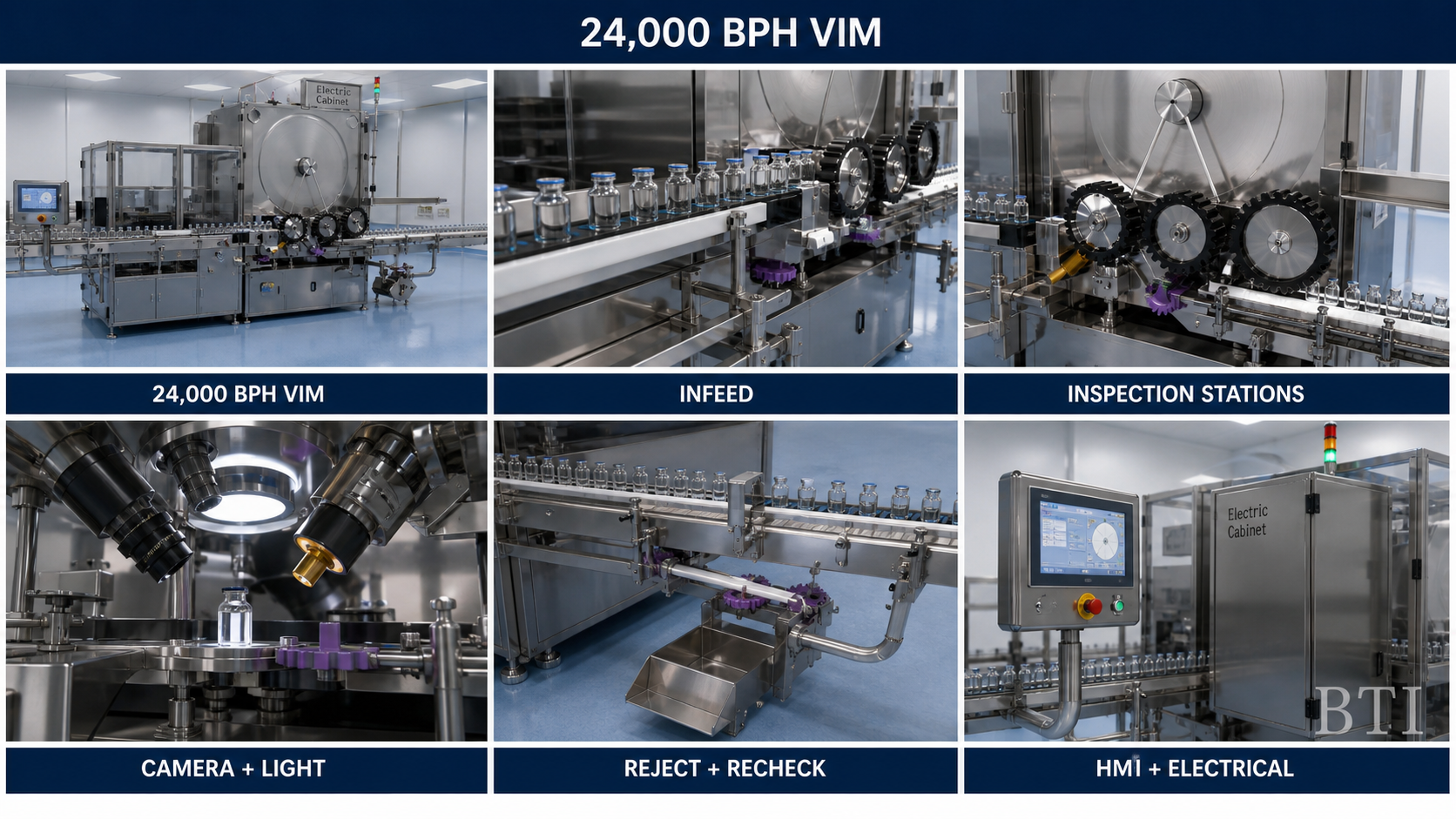
High-speed 24,000 BPH optical VIM inspector, dual re-inspection conveyor lines, electrical cabinets.
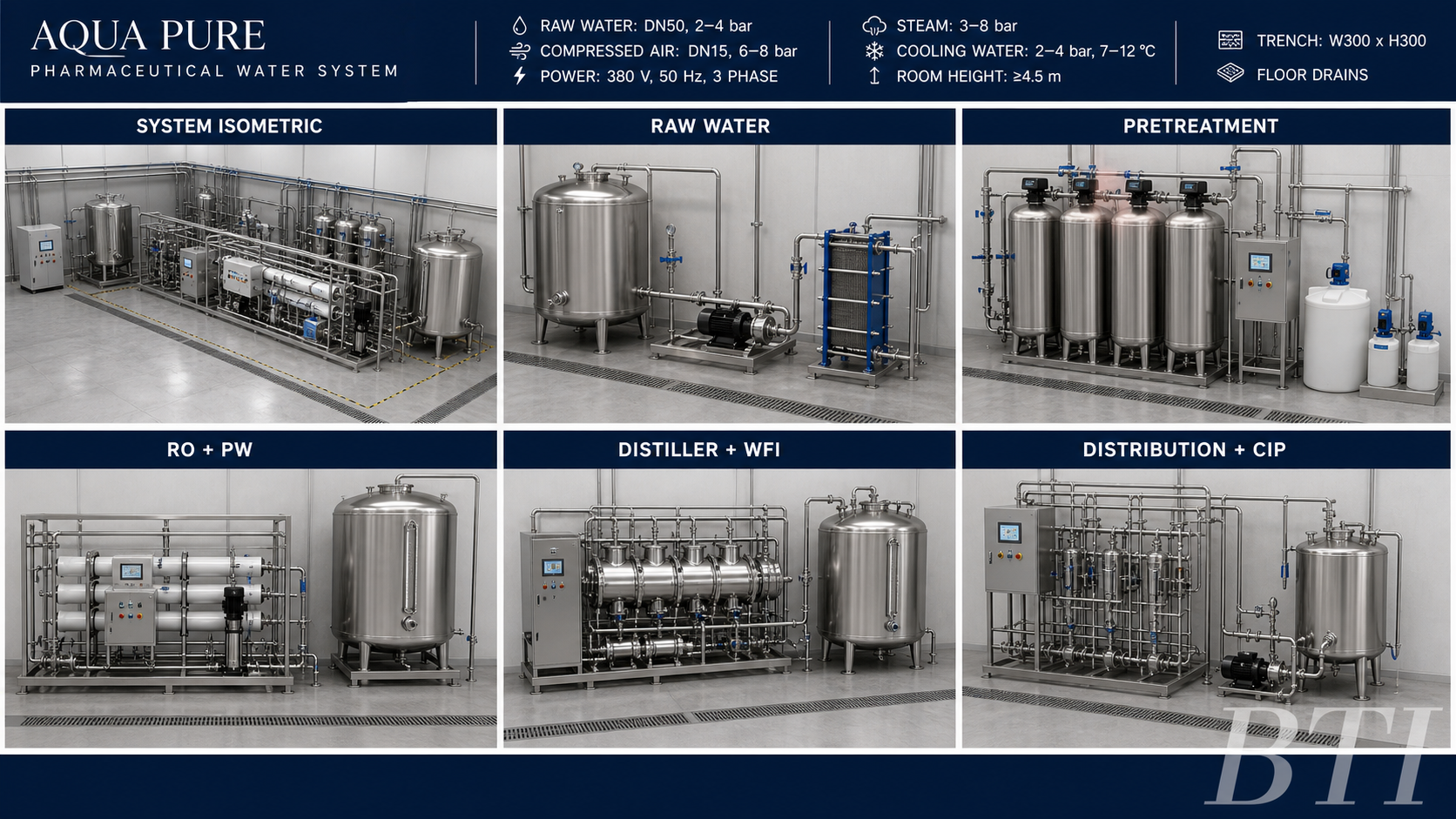
10,000 L/h RO plant, 6,000 L/h Multi-effect WFI distiller, CIP sanitary cleaning skid.
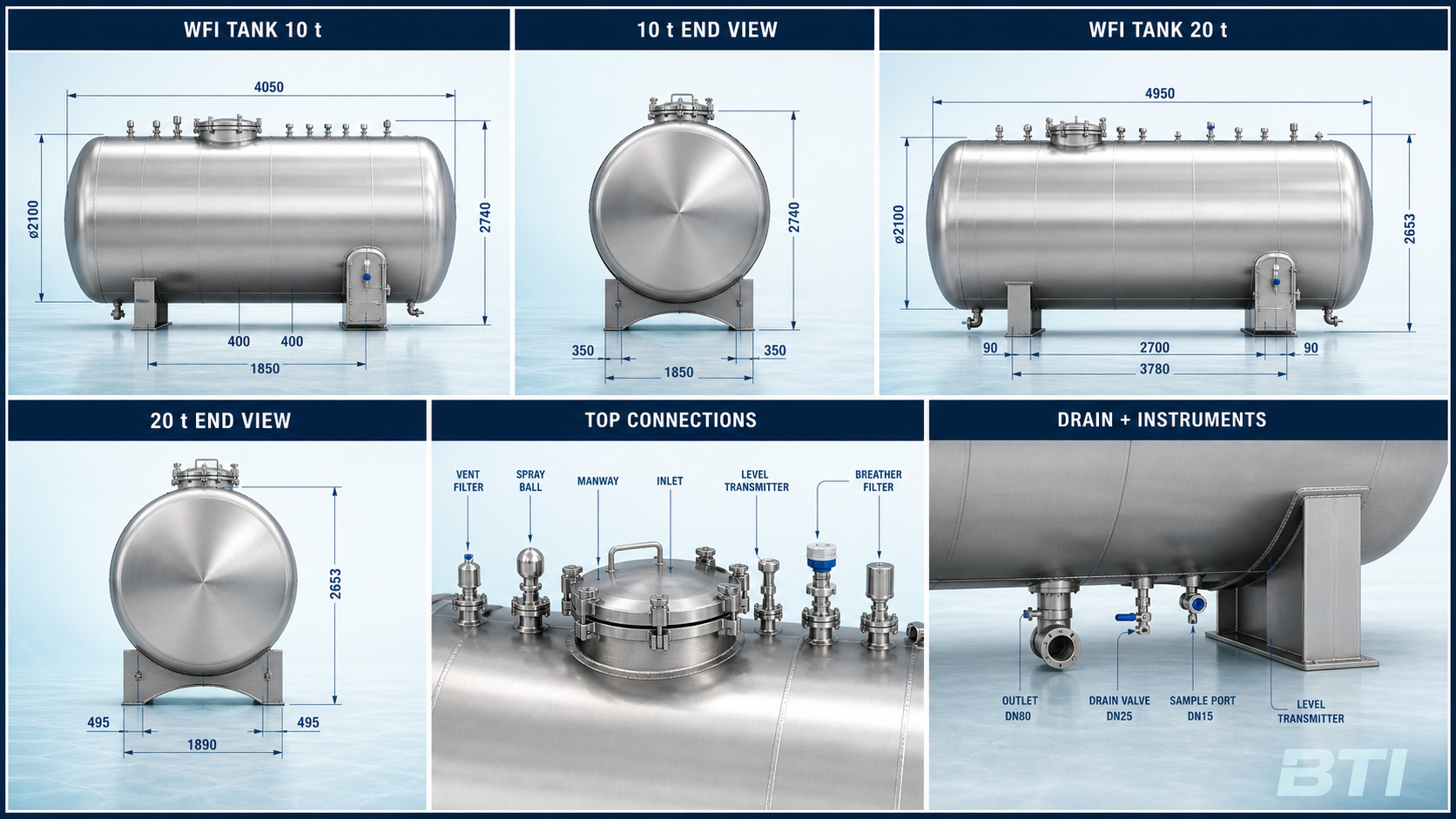
Sanitary SS316L 10,000L & 20,000L horizontal WFI storage vessels with $80^\circ\text{C}$ hot loop distribution.
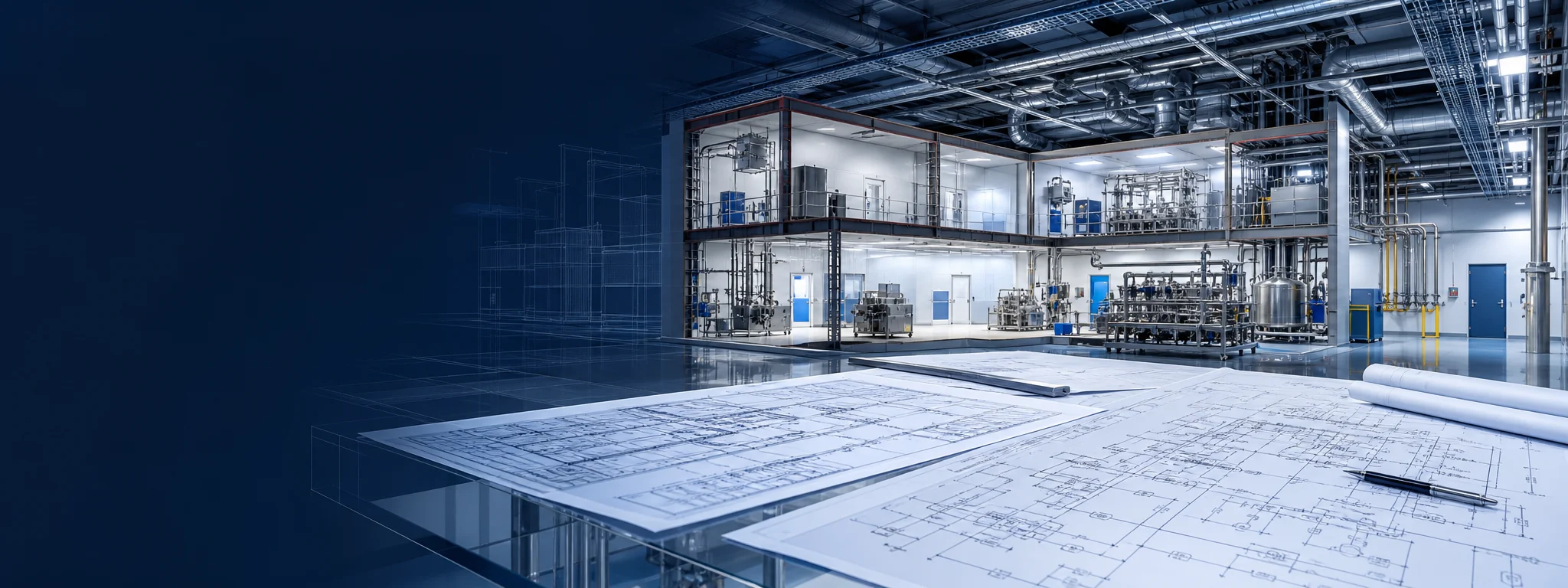
Coordinated architectural, process, HVAC, clean-utility, electrical, fire-life-safety and automation information for disciplined project delivery.

A single controlled framework connecting design basis, construction, commissioning, qualification, contamination control and DRAP/PIC/S readiness.
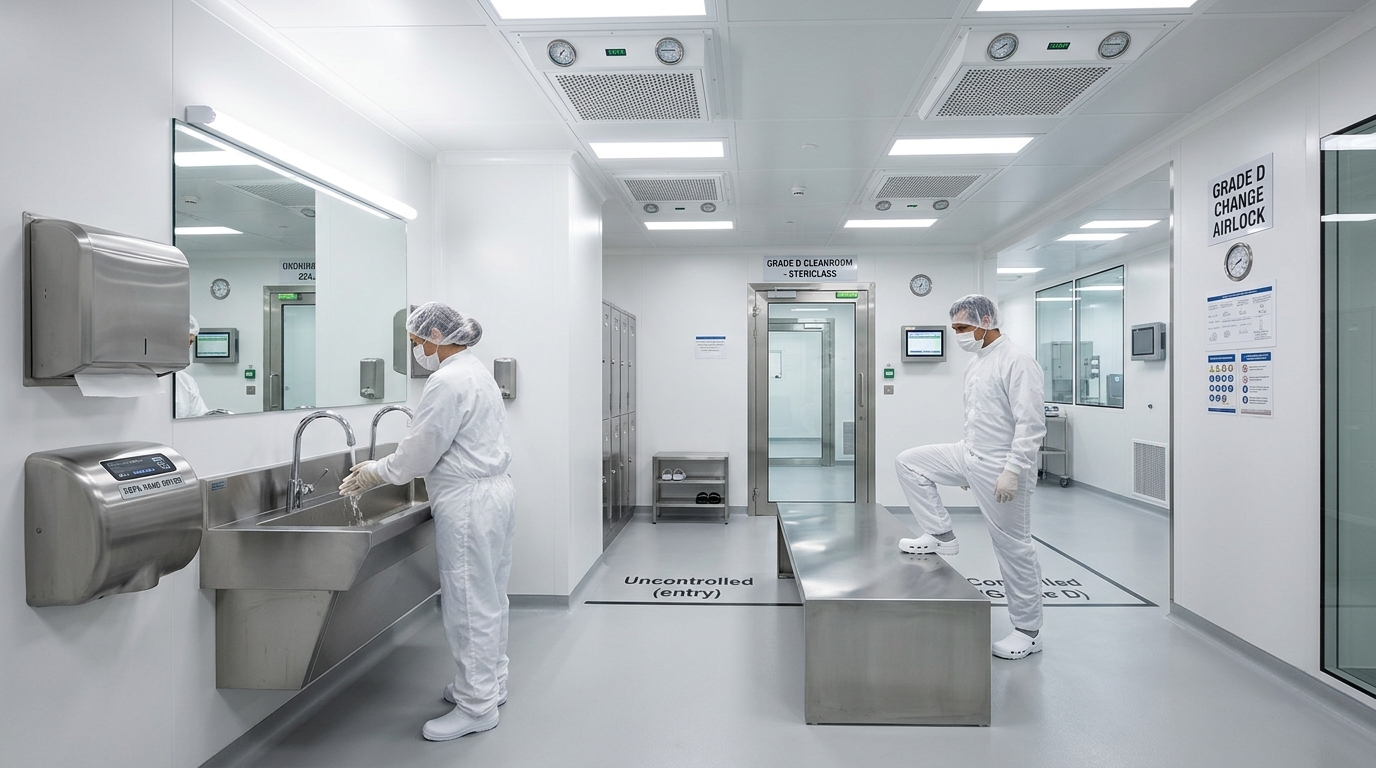
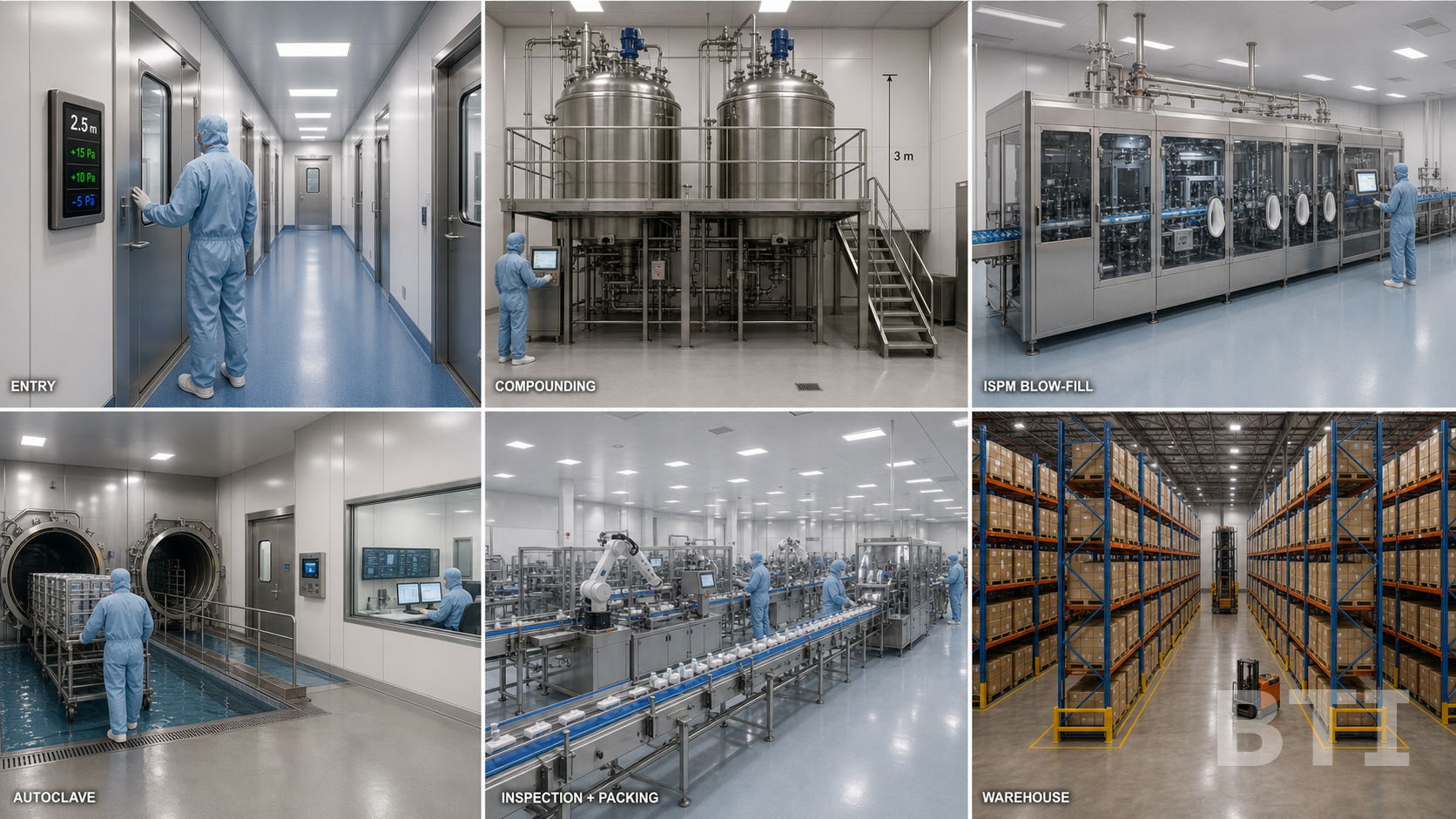
Sensor-activated hands-free wash basin, HEPA warm-air hand dryer, and Step-Over Bench (SOB 1). Sinks are restricted to Grade D only as per EU Annex 1.
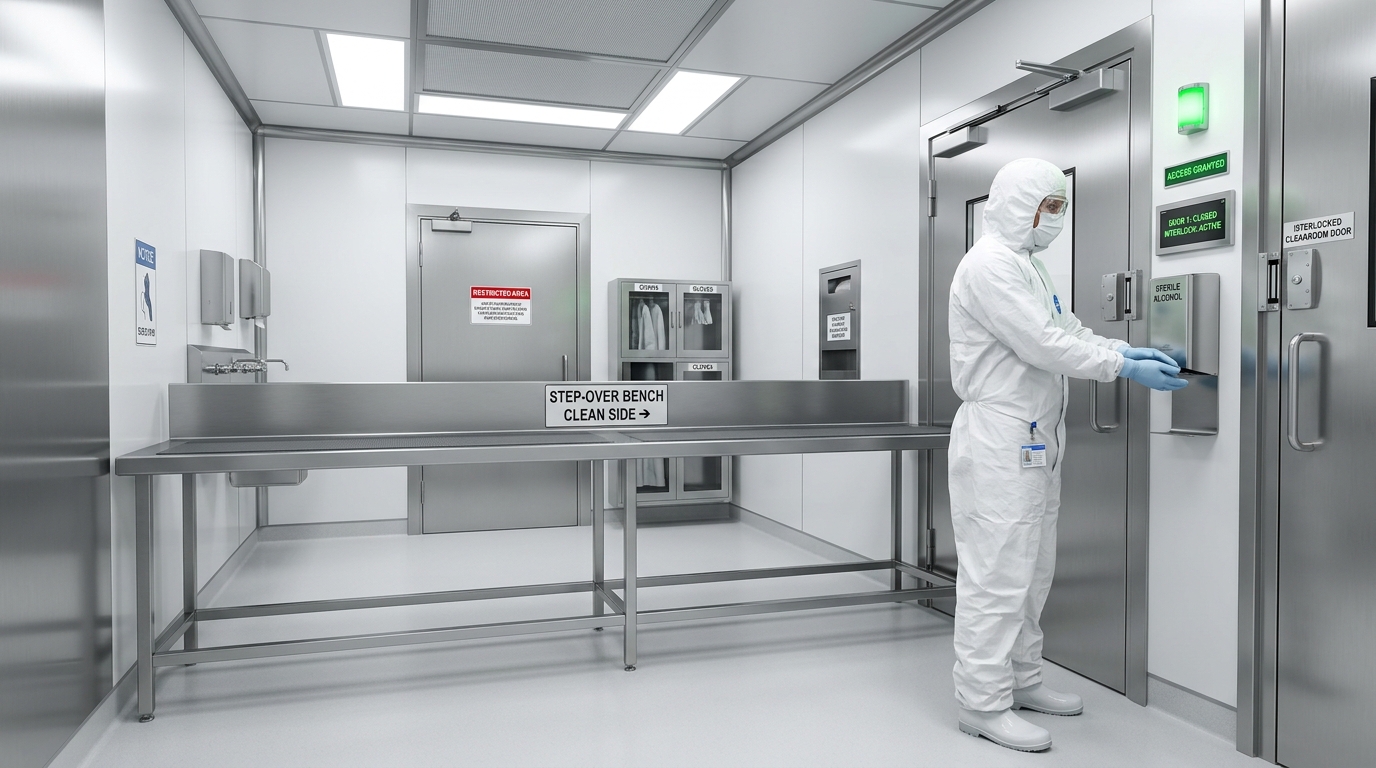
Step-over bench (SOB 2 & 3), continuous filament sterile jumpsuit gowning, electromagnetic door interlocks with LED status lights, and sensor IPA hand rub.
Street clothing & outdoor shoe removal. Hairnet application.
Step-over bench 1. Hand wash, HEPA dryer, Grade D coat & shoes. Sensor IPA rub.
Step-over bench 2. Non-linting jumpsuit, hood, goggles, clean boots & nitrile gloves. (No sinks).
Step-over bench 3. Sterile jumpsuit, sterile over-boots, sterile surgical gloves & IPA spray purge.
The proposal brings the full manufacturing chain onto one coordinated campus: pharmaceutical water generation, compounding and holding, ISPM all-in-one blow–fill, terminal sterilization, 24,000 BPH visual inspection, robotic secondary packing and high-density finished-goods storage. D3 establishes the baseline configuration; D4 develops the strategic expansion case with two machine trains and approximately twice the production capacity.
Butt Chemicals Pvt Ltd, 31 km Lahore–Sheikhupura–Faisalabad Road, Harriya Tibbi, Sheikhupura, Punjab, Pakistan
PW/WFI generation → solution preparation → ISPM molding/filling → terminal sterilization → inspection → packing → controlled storage.
Grade A/B/C/D zoning, pressure cascades, PAL/MAL segregation, hygienic utilities, environmental monitoring and traceable automation.
Design basis, architecture, PFD/P&IDs, HVAC, electrical, utilities, life safety, validation, CCS, DRAP dossier, BOQ and execution planning.
D3 provides the reference plant arrangement and a lower-complexity operating baseline. D4 is configured as the strategic growth option with two ISPM production trains, duplicated critical downstream equipment and approximately twice the nominal manufacturing capacity, subject to final vendor guarantees and detailed utility confirmation.
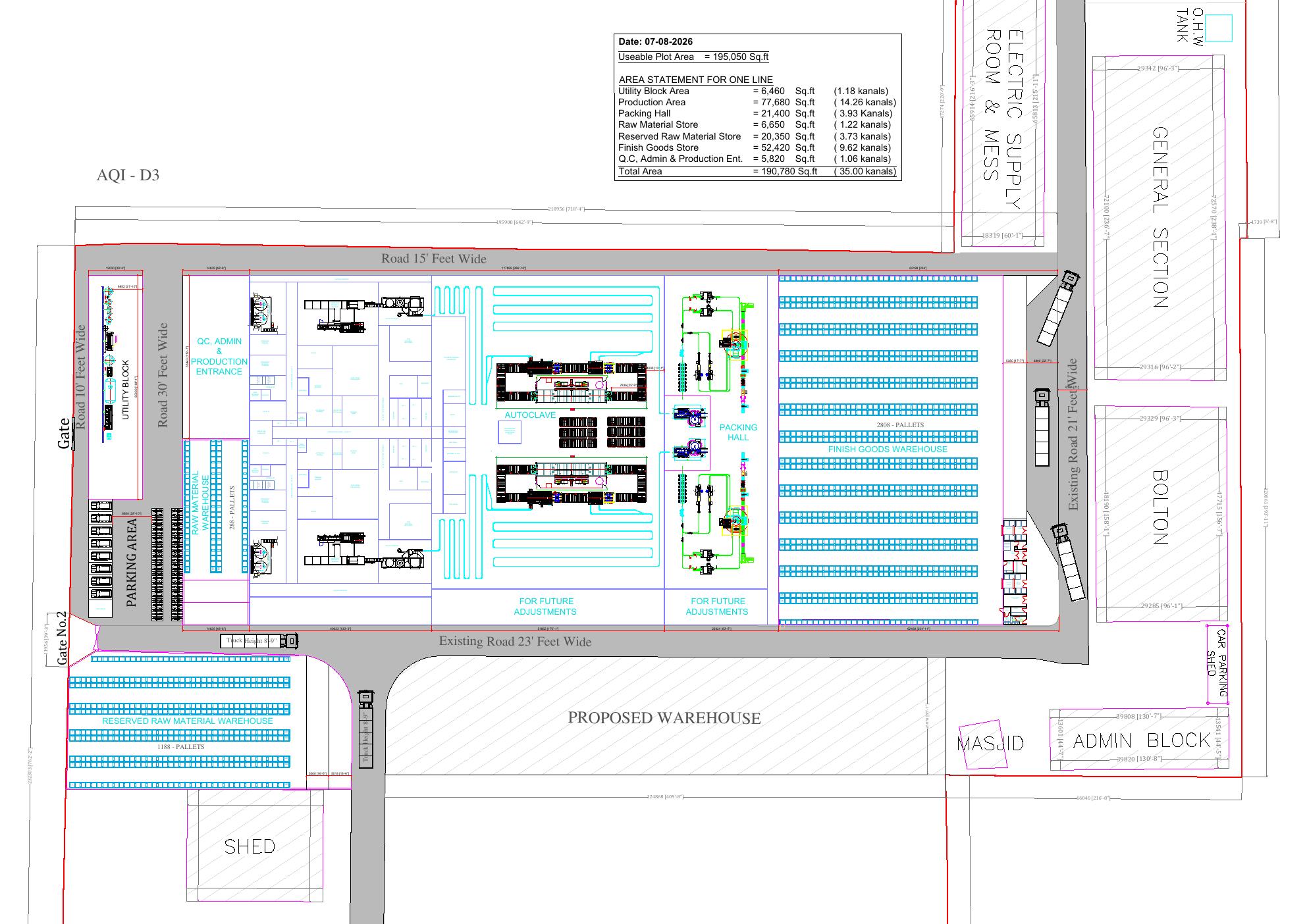
Baseline manufacturing configuration • Reference cleanroom and logistics concept • Lower initial operating complexity.
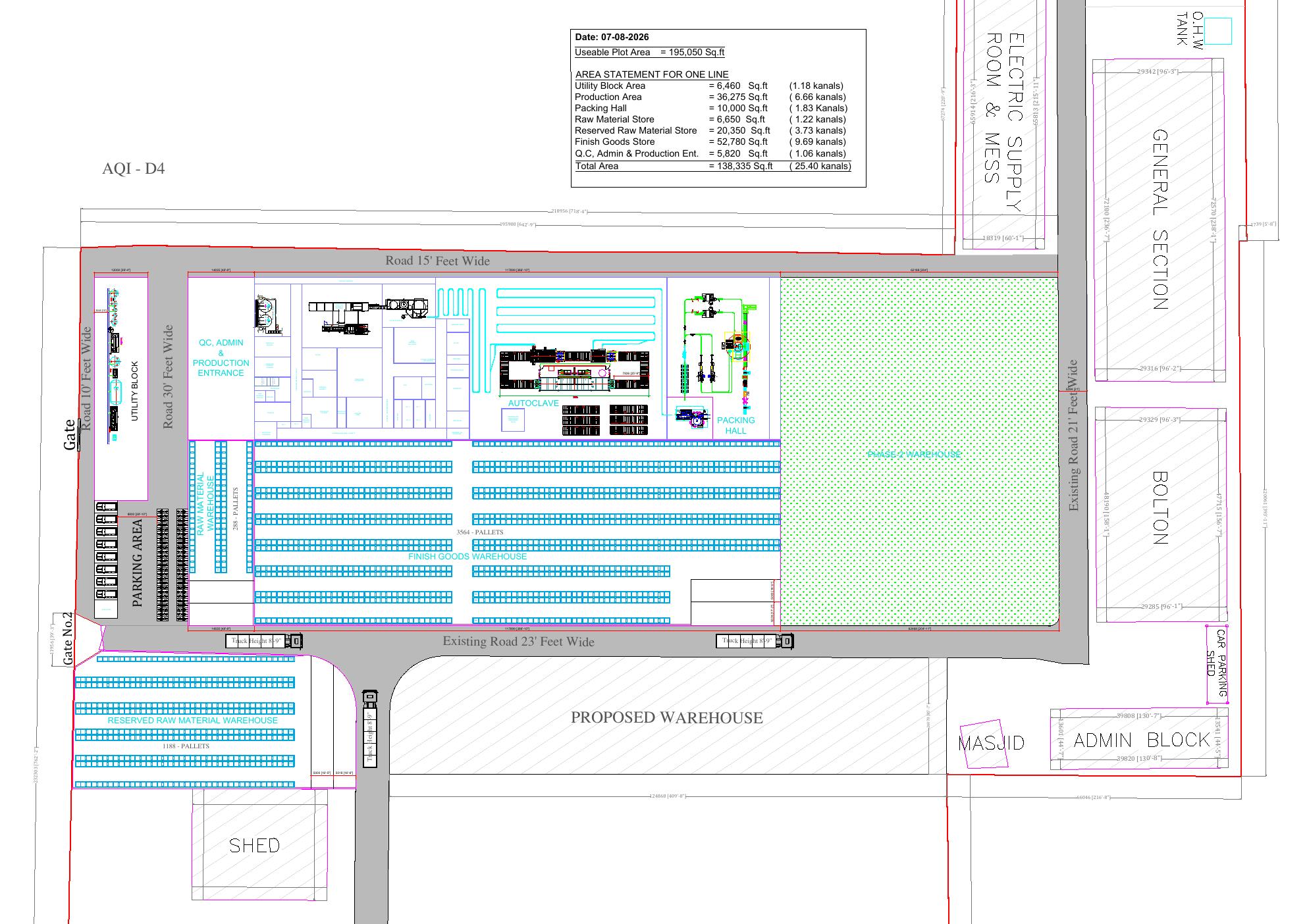
Two production-machine trains • Approximately 2× nominal manufacturing capacity • 3,564-pallet high-density warehouse.
| Evaluation Metric / Domain | Option AQI-D3 (Baseline) | Option AQI-D4 (Double Train) | Engineering Advantage / Variance |
|---|---|---|---|
| Total Building Footprint | 190,780 sq. ft. (35.00 Kanals) | 138,335 sq. ft. (25.40 Kanals) | AQI-D4 saves 52,445 sq. ft. (-27.5% Civil Footprint) |
| Production Area | Single reference production train | Two coordinated production trains | D4 provides approximately 2× nominal line capacity |
| Finished Goods Storage | 52,420 sq. ft. (Standard Racking) | 52,780 sq. ft. (High-Bay Drive-In) | Equal area, but 3x capacity in D4 |
| Pallet Storage Capacity | 1,188 Pallet Positions | 3,564 Pallet Positions | AQI-D4 increases storage by +200% (+2,376 slots) |
| PW / WFI Peak Demand | Single-train demand basis | Double-train diversified peak demand | D4 utilities must be sized for two trains, diversity, redundancy and future margin |
| WFI Storage Duty | Single-train duty with defined reserve | 10T/20T coordinated duty/standby philosophy for double-train operation | D4 provides stronger continuity; generation and loop recovery require detailed verification |
| Electrical Maximum Demand | Single-train connected-load basis | Two-train load plus N+1 critical systems | D4 requires enlarged transformer, generator, UPS and distribution architecture |
| Primary ISPM Equipment | 1 complete all-in-one blow–fill train | 2 complete all-in-one blow–fill trains | D4 doubles nominal filling availability and enables campaign flexibility |
| Downstream Equipment | Single sterilization, inspection and packing stream | Duplicated or capacity-matched autoclave, VIM and packing streams | D4 avoids a downstream bottleneck against two upstream machines |
| HVAC & Cleanroom Strategy | Fewer classified suites and AHU systems | Two production zones with segregated or resilient AHU architecture | D4 improves maintainability but increases qualification scope and energy duty |
| Business Continuity | Higher dependency on the single production train | One train can support production while the second is maintained or changed over | D4 materially improves operational resilience |
| Validation Program | One equipment and process qualification stream | Two equipment trains plus equivalence, bracketing and concurrent readiness strategy | D4 requires a larger DQ/IQ/OQ/PQ, APS and CSV program |
| Recommended Decision Gate | Preferred where market demand supports one line and capital must be minimized | Preferred where forecast demand, exports and continuity justify two lines | Freeze after vendor throughput guarantees, SKU mix, utility balance and financial model |
| Phased Capital Strategy | Lower equipment count and simpler initial qualification | Higher initial equipment CAPEX with double-output potential | D4 recommended where demand supports 2× capacity and stronger redundancy |
| Tag | Equipment Name | Specification / Capacity | Qty | Cleanroom Zone | Utility Connections |
|---|
380V, 50Hz, 3-Phase 5-Wire System connected to control cabinets.
DN15 connection, 6 – 8 bar operating pressure for solenoid valves.
3 – 8 bar operating pressure; requires dedicated condensate discharge.
DN50 raw inlet at 2–4 bar; SS316L loop distribution for PW & WFI.